 ourgarden
Make your own mix
A few pals have been checking in now the site's been up a while, so here's how we do things. We're not experts and this isn't advice: it's what's worked for us, failures included.
Why bother? A big bag of compost is around £8 for 40–60 litres, and you can't fault that. Then you notice "potting mix" is basically the same stuff with a bit of grit in it, at £12.99 for 5 litres. You start to wonder.
Mixing your own gets you better stuff, made how you want it, for a fraction of the price. Nothing here is set in stone: work with what you've got.
What we buy
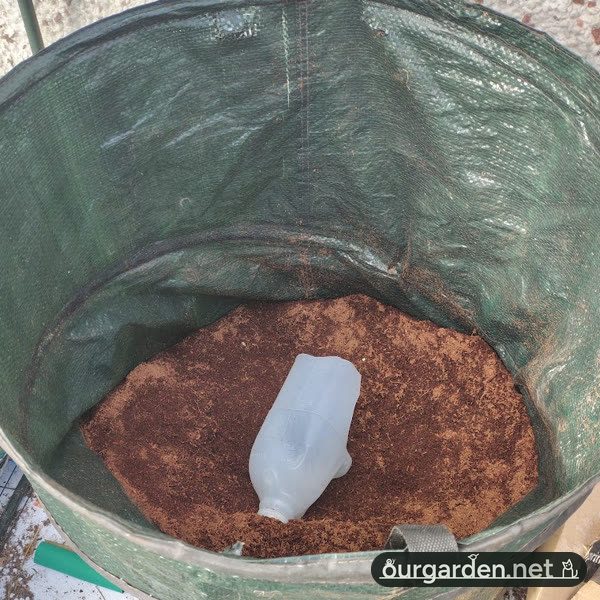 Our coir, fluffed up
Coir on Wikipedia ↗
Coir (say "KOY-er"). Coconut husk fibre: the fluffy base that holds water. Buy a block online; "washed" or "buffered" is worth looking for, because cheap coir can be a bit salty. Put it in a container, add water, wait, rub it apart, add more water until it's done. That's the hardest part of the whole process.
Coir has almost no food in it. It's there for structure and water; the compost does the feeding, so a mostly-coir mix needs a feed.
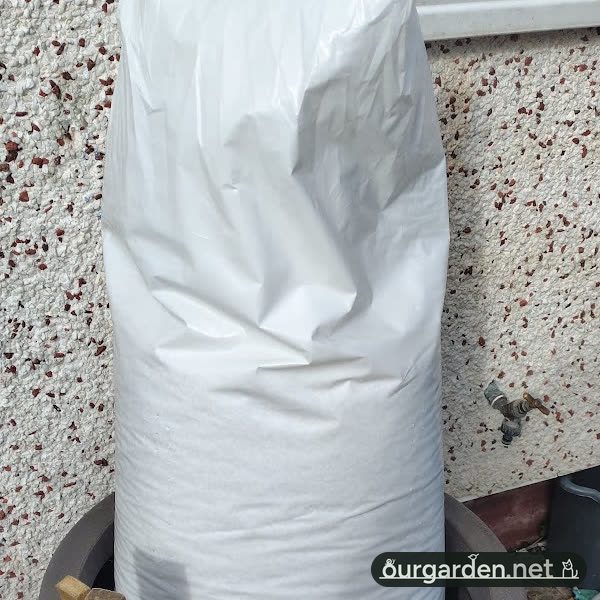 The 100 litre sack
Perlite on Wikipedia ↗
Perlite. Volcanic glass heated until it pops: glass Rice Krispies. It keeps the mix light and airy and holds a little water without going soggy. Skip the little garden-centre bags, which are daylight robbery per litre; big sacks are cheap if you've got somewhere to keep one. It's fine left out in the rain with a couple of drainage holes poked in the bottom.
Ours went on a jolly to Scotland for some reason, so we got a 100 litre sack from a local hydroponics shop instead, with 10% off for paying by card.
The dust is nasty: wet it before you mix it, wear a cheap dust mask, and don't accidentally kick the bag whilst you're bent over it.
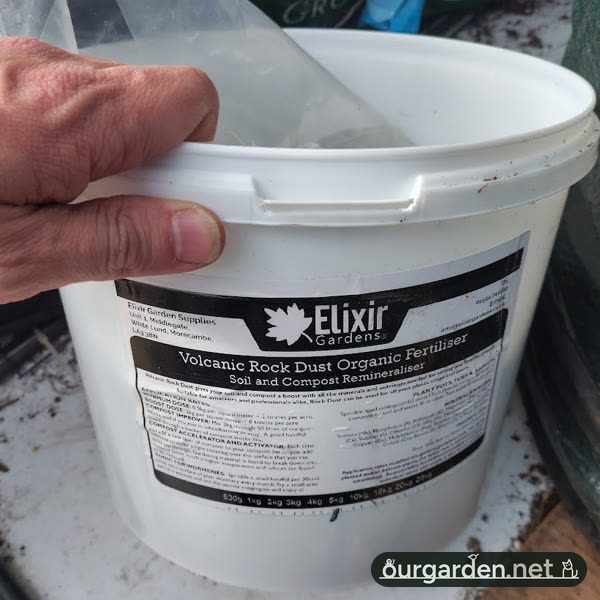 Our tub of rock dust
Rock dust on Wikipedia ↗
Volcanic rock dust. Finely ground volcanic rock, for minerals, not drainage. The priciest ingredient and you can skip it, but it's still not expensive. Use it sparingly: a handful went into planting each of our apple trees.
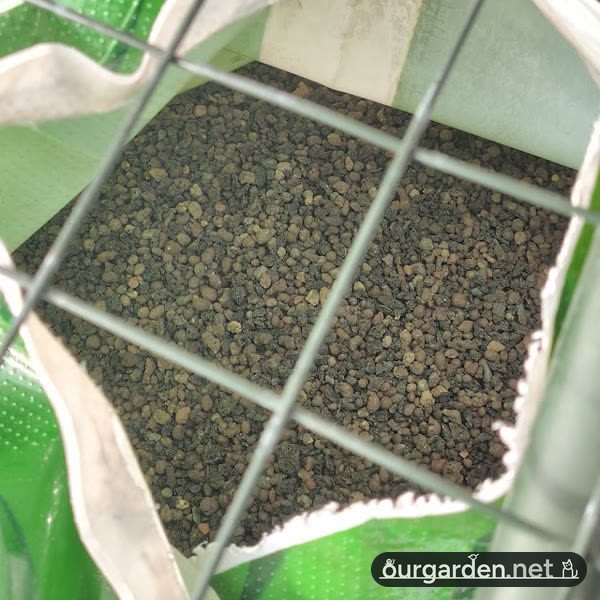 Our grit
Gravel on Wikipedia ↗
Horticultural grit. Can stand in for perlite at a similar price. It holds no water at all: it's there for drainage and weight, so it suits outdoor pots that need to stay put and anything that likes it dry. For houseplants, perlite is lighter and nicer to work with.
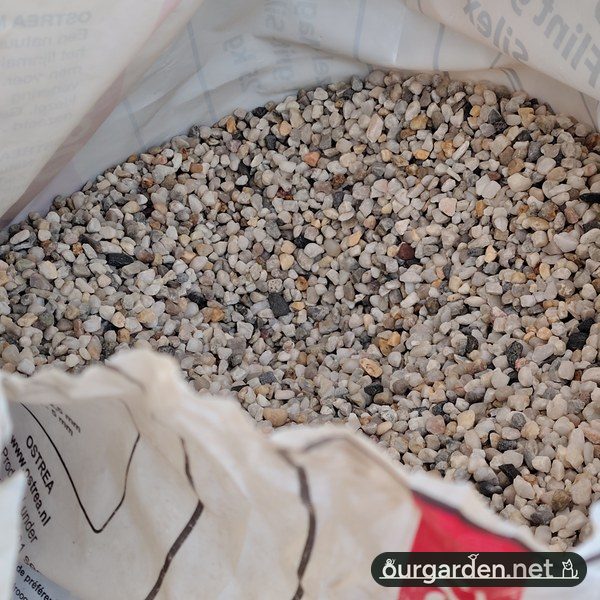 Flint chick grit, 4–7 mm, in the sack
Flint on Wikipedia ↗
Flint chick grit. Crushed flint sold to help chickens digest. It's sharp-edged, clean and doesn't break down, so it makes good bonsai and cactus grit. It comes in sizes; we use two, 2–5 mm and 4–7 mm, half and half. A 25 kg sack is about 16 litres.
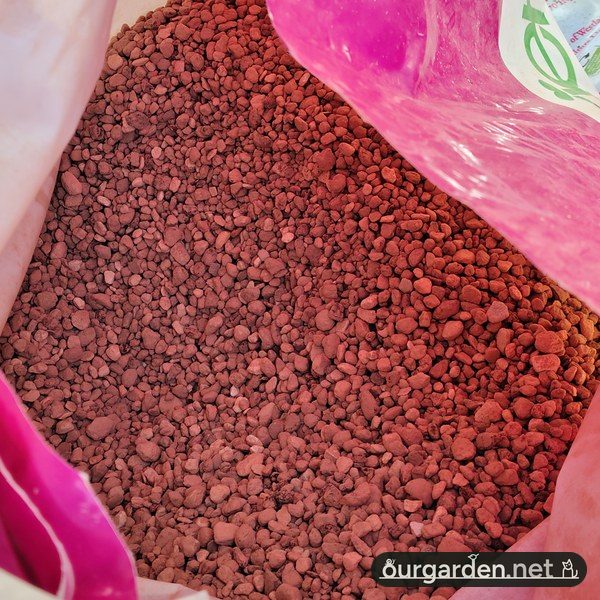 The pink moler clay litter, in the bag
Diatomaceous earth on Wikipedia ↗
Moler clay cat litter. Fired clay granules, hard and porous: they hold water and air, like the pricey bonsai clays. It has to be the non-clumping kind with no scent. Ours is the "pink" one; we soaked a handful first to check the colour didn't run (it didn't; it's just the colour of the clay).
Pumice. Light, porous volcanic rock. A small handful goes in the bonsai mix.
Vermiculite? We leave it out. In our experience it's a bit stodgy, and coir holds plenty of water on its own.
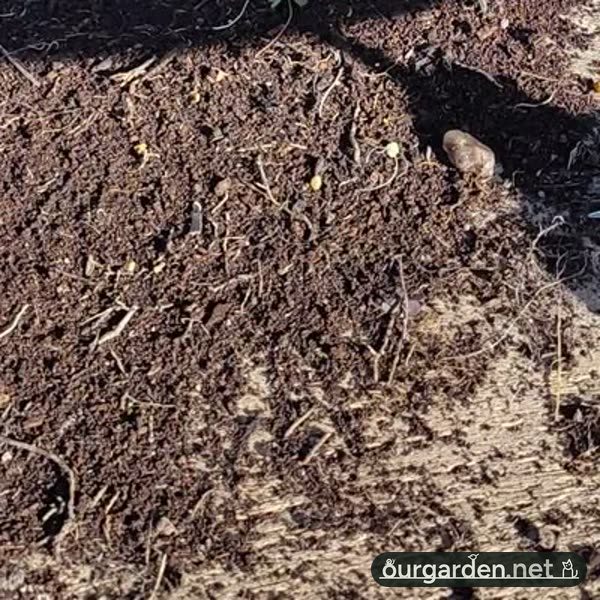 Compost, ready to go
Compost on Wikipedia ↗
Compost. This brings the food. You can make your own: a cheap bin (there are free ones on Marketplace), green and brown waste in, and patience. It takes a while to get the crumbly stuff at the bottom, and cheap bagged compost does the job in the meantime.
Or build your own bin system, if you've got the materials and the motivation. Fair warning, it's hard work. We're going to build another one for someone, so we'll document that as its own note. In the meantime, YouTube is good for instruction.
The mixes
What you'd typically pay for a bag, and what it works out at when you make it yourself.
| Mix | Bag in the shop | Bag per litre | Made by us, per litre | Our recipe (by volume) |
|---|---|---|---|---|
| Garden general (outdoor pots, beds) | John Innes-type, about £9 / 30 L | about 30p | about 8p | 6 garden soil, 3 compost, 1 grit |
| Potting / all-purpose | Multi-purpose, £4–7 / 50 L | 8–14p | about 15p | 2 sifted garden soil, 2 coir, 1 perlite |
| Indoor / houseplant | £5–8.50 / 10 L | 50–85p | about 22p | 2 coir, 1 perlite, 1 compost |
| Cactus and succulent | £4–6.50 / 4–10 L | 90p–£1.60 | about 35p | 1 coir, 1 perlite, 1 grit |
| Bonsai (young trees) | about £9 / 10 L, specialist £2–3/L | 90p–£3 | about £1 | 2 moler clay, 1 small chick grit, 1 large chick grit, a small handful of pumice, a handful of compost, a cup of lightweight cactus grit |
| Seedlings and cuttings | Seed compost, about £8.50 / 50 L | about 17p | about 26p | 1 coir, 1 perlite |
Add a handful of volcanic rock dust to any of them if you've got it. All of these can be adjusted to taste: ours are mixed by eye.
The seedling mix has no food in it, which is what you want for germinating. Once seedlings have their first true leaves, start a weak feed or pot them on into something with compost in it.
Making the bonsai mix
Half clay, half grit to start, the grit half small and half large. Then a small handful of pumice, a handful of compost and a cup of lightweight cactus grit. More clay for trees that like it damper, less for ones that like it dry. The compost is a handful, not a layer.
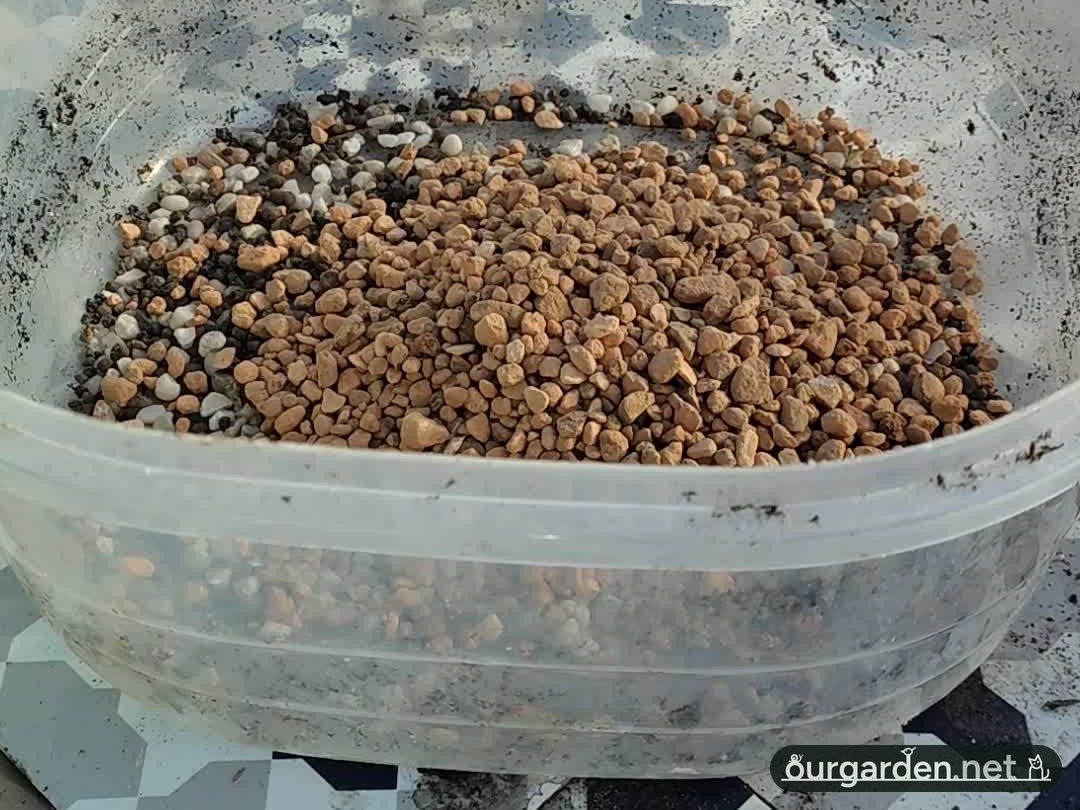
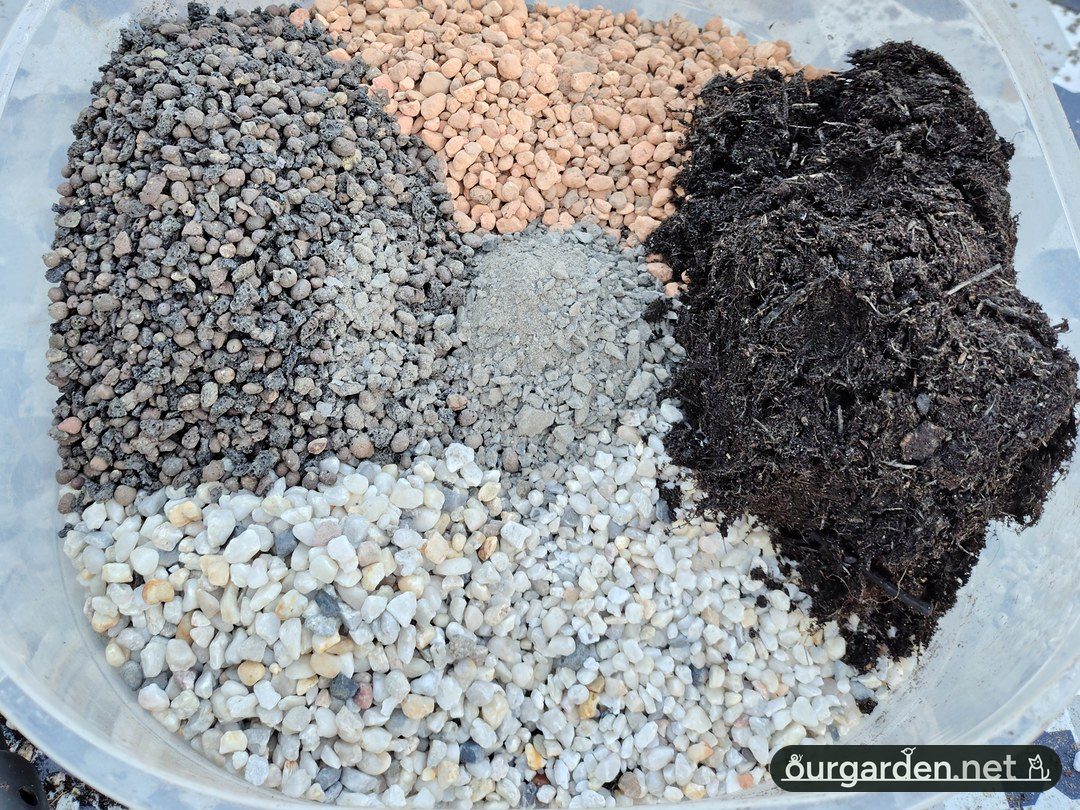
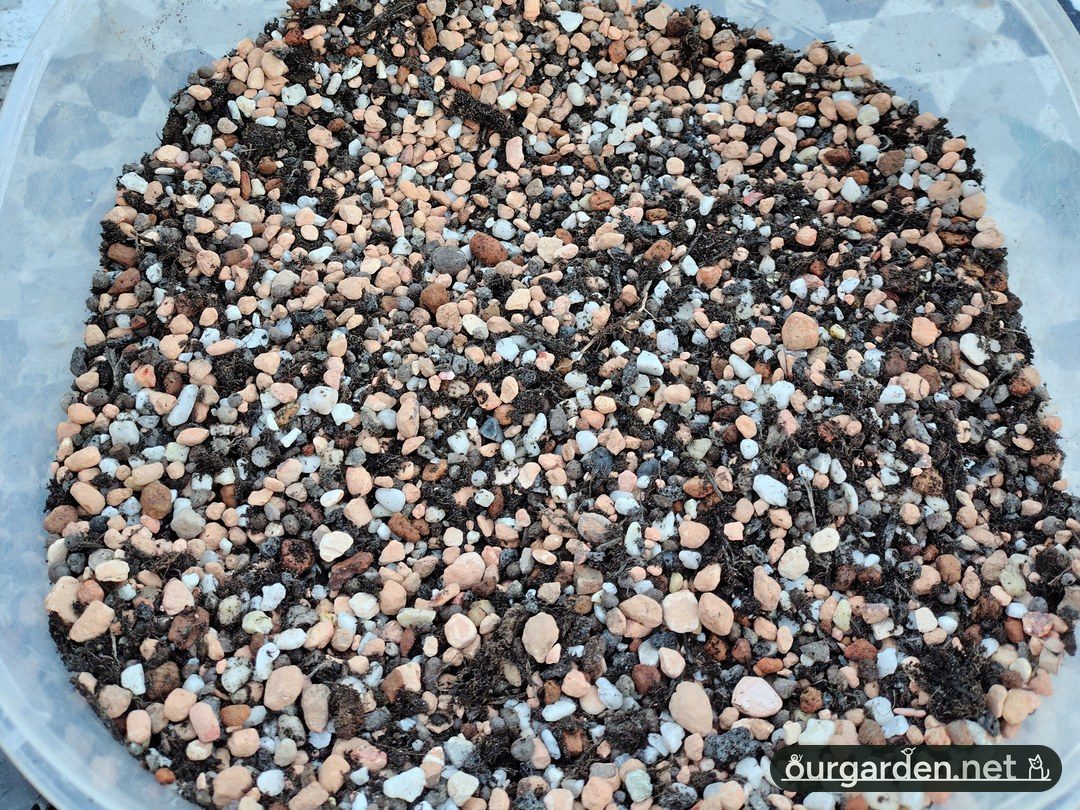
The raw materials
| Garden centre | Ordering online / big bags | |
|---|---|---|
| Coir | small bricks, about 40p+/L | 5 kg block (makes 60–75 L), £15–20, about 25p/L |
| Perlite | 10 L bag about £10, £1/L | 100 L sack £25–30, 25–30p/L |
| Grit | 20 kg (about 12 L), about £6, about 50p/L | about the same |
| Flint chick grit | not usually | 25 kg (about 16 L), £22–23.50 delivered, about £1.40/L |
| Moler clay cat litter | pet shops, supermarkets | 30 L, about £22 delivered, about 73p/L |
| Volcanic rock dust | small tubs | 5 kg tub, about £15–20 (optional; a handful at a time) |
| Compost | multi-purpose, 8–14p/L | or your own heap: free |
| Garden soil | free | free |
Outlay
For most of the mixes: one coir block, one 100 L sack of perlite and a bag of grit come to roughly £45–55. That makes, for example, about 140 litres of indoor mix, which would cost £70–120 in 10 L bags, with most of the perlite and some grit left over. After that it's mostly a new coir block, £15–20.
For the bonsai mix: two sacks of chick grit and a bag of cat litter came to about £67 and make roughly 65 litres.
Money and effort
Effort: next to none. Starting is the hard bit. Look up a recipe and eyeball it; our mixing bowl is old Tupperware.
Money: this one depends on where you are. A sack of perlite is £25–30 upfront, a lot more than a tenner for a bag of potting mix. If that isn't doable right now, there's no shame in premixed stuff.
For us it's a saving: we've got a lot of potting and sowing on the go, and buying in bulk means we don't run out. Without the compost heap we'd be buying garden bags too. Against average prices it's a saving, and a big upgrade in quality and control; for houseplants and bonsai it's a massive saving.